Visiting Scientists
The Visitor Program is unparalleled; no other program in a traditional research setting is likely to dedicate laboratory space and significant research support to a group of visiting scientists to conduct research of their own design.
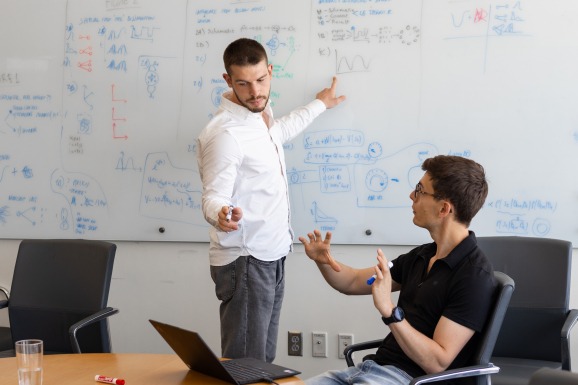
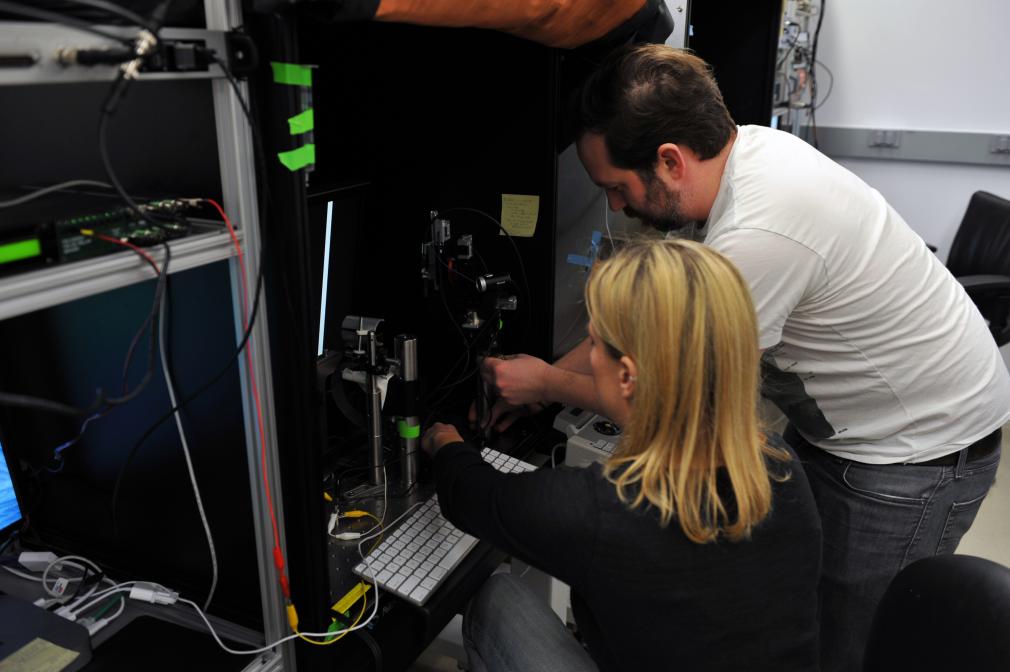
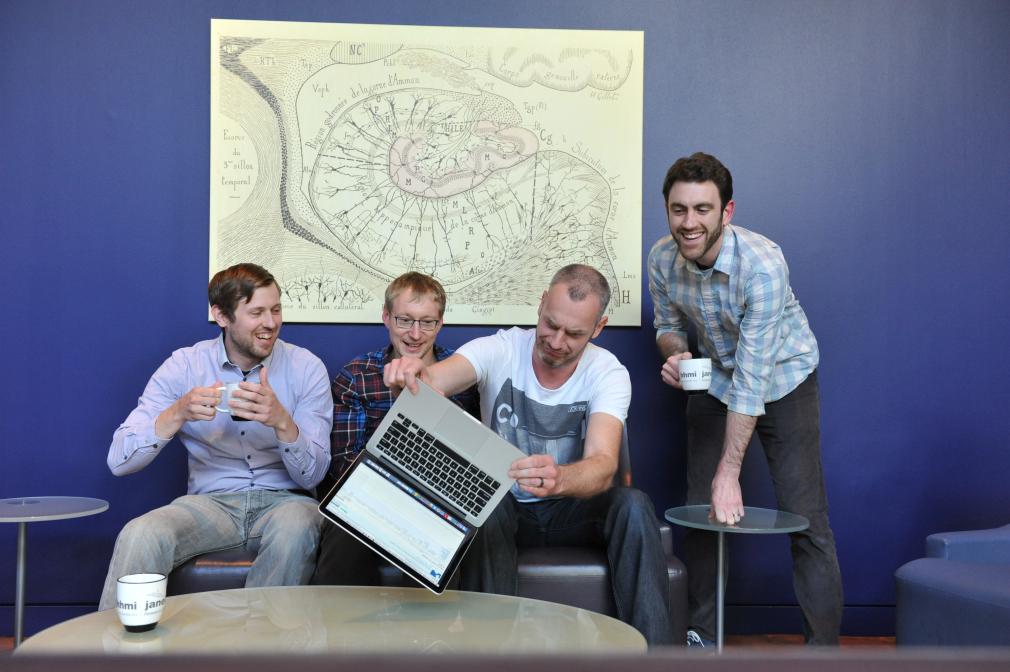
In addition to supporting the individual research programs of Janelia lab heads, a significant fraction of the resources at Janelia Farm support the Visitor Program, a research program that brings together resident scientists and visiting scientists from all over the world to carry out research at Janelia Farm. Visitors are expected to participate fully in the ongoing intellectual life of the campus.
Visitors range in career stage from graduate students to postdoctoral fellows to very senior, established investigators and represent multiple disciplines: biologists, chemists, computer scientists, engineers, theorists, and physicists, to name a few. To date, 156 visiting scientists from 16 countries have participated in the Visitor Program.
In general, the visitors' research must be collaborative with that of the Janelia lab heads who act as their official hosts.
- Individual visitor: One visiting scientist, perhaps with one or two members of his or her research team, is closely allied with the laboratory of an individual Janelia lab head or is part of a collaborative effort between a small number of lab heads.
- Project team: A group of visiting scientists aim to work together on an ambitious, collaborative research project at Janelia Farm that would be difficult to accomplish elsewhere. In general, such project teams may be provided with a small number of Janelia-funded staff and full access to our core shared resource labs. Preference is given to projects that are clearly allied to the overall mission of Janelia.
- Short-term visitors: To extend the availability of cutting-edge technology and state-of-the art facilities at Janelia to the larger biomedical research community, we also accommodate short-term visitors of two types:
- HHMI investigators, members of their laboratories, HHMI international scholars, and other members of the scientific community (as capacity allows) who may come to Janelia Farm for periods of a few days to a few weeks to make use of specific equipment or facilities not available to them at their home institution.
- Scientists who may come for a week or two to interact informally with our research community.
For both individual visitors and project teams, various time-sharing arrangements are possible - for example, a full-time sabbatical by the visiting scientist or an arrangement in which the visiting scientist spends one week a month at Janelia but has a person or two in residence full time. The visitor should propose a specific arrangement as part of the proposal. Arrangements extending beyond a year are reviewed on an annual basis.
Available resources may include: laboratory and office space for the visiting scientist while in residence, access to shared resource labs, funds for supplies, travel to and from Janelia, residential housing, and salary support for the visitor or for dedicated staff.
A visitor is hosted by a Janelia lab head. Applications are accepted on a continuous basis. If you are interested in applying to the Janelia Farm Visitor Program, please begin by writing a statement of research interest; include a brief description of the project, requested staff and costs, and a list of potential Janelia lab head collaborators. Send your curriculum vitae and research statement to Dr. Zarixia Zavala-Ruiz.
For questions about the Visitor Program:
Zarixia Zavala-Ruiz, Ph.D.
Science Program Manager
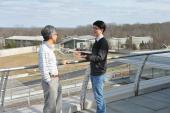
Professor Ulrike Gaul and graduate student Malte Kremer, from the Gene Center of the LMU Munich, study the role of glial cells in the development and function of the fruit fly brain. As visiting scientists in the Visitor Program, they collaborated with scientists at Janelia Farm to characterize glial-cell specific expression in fruit flies.
The morphology of glia in the adult Drosophila nervous system
The glia in the Drosophila adult brain have only partially been described, and while glial-specific drivers had been found within the Janelia collection of nervous system GAL4 drivers, they were not fully annotated or characterized. In this visitor project, Dr. Ulrike Gaul and graduate student Malte Kremer sought to use the drivers in the Janelia collection to identify all glial cell types present in the adult brain and characterize them with regard to their number, morphology, and intercellular interaction. Screening the entire collection of 7,000 GAL4 lines, they found 800 with glial expression, and 250 that are expressed specifically in glia. Among these 250, they identified not only lines that are generally expressed in all cells of a given glial cell type, but also lines with regionally restricted expression, especially in the optic lobes and the ventral nerve cord. This project will contribute to the understanding of the diversity and complexity of glial cell anatomy and provide important tools for future studies of glial function.
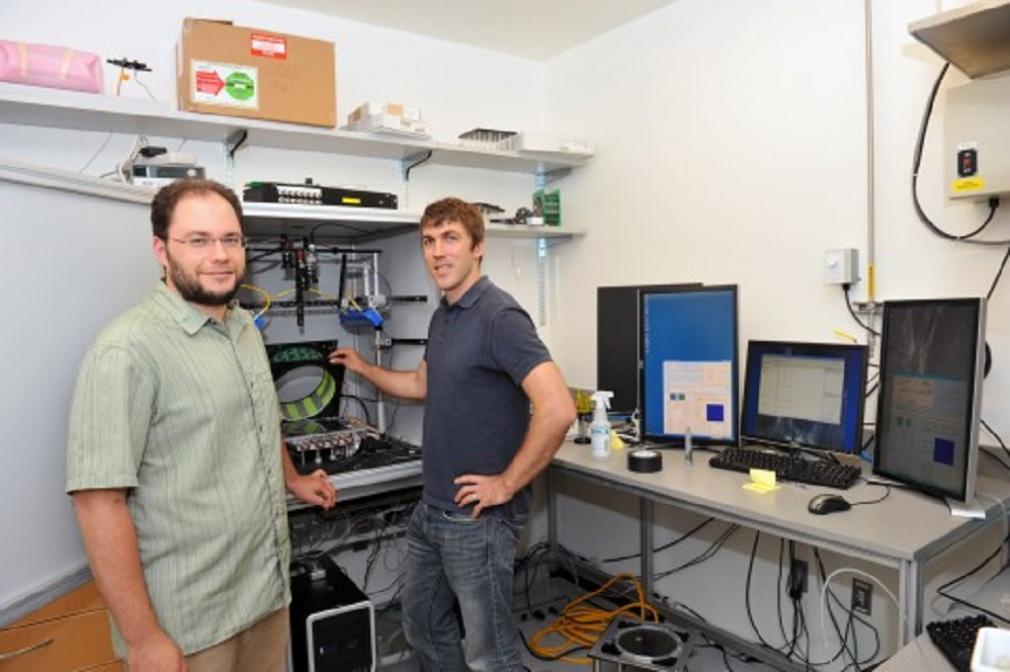
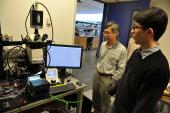
Dr. William Schafer and graduate student, Victoria Butler, from the Medical Research Council Laboratory of Molecular Biology at Cambridge, are collaborating with scientists at Janelia Farm through the Visitor Program to understand how patterns of neuromuscular activity generate C. elegans locomotor behavior.
The coordination of complex body movements uses sensory feedback to detect forces associated with body movements. The molecules involved in the sensory feedback as well as the mechanism by which the neural circuits regulate locomotion are not well understood. In collaboration with Drs. Dmitri Chklovskii and Rex Kerr at Janelia Farm, Dr. William Schafer and graduate student, Victoria Butler, have developed a tracking microscope that allows simultaneous recording of nematode behavior and neuromuscular calcium transients. They have generated transgenic lines expressing the fluorescent calcium indicator GCaMP3 in body wall muscle and sub-classes of motor neurons. The aim now is to use these lines to observe the muscle and neuron activity in behaving worms under different environmental conditions and in different mutant backgrounds. They hope to use the data collected to develop mechanistic models for C. elegans locomotion behaviors.
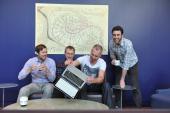
Visitor(s): David Anderson (Professor, California Institute of Technology/HHMI), Eric Hoopfer (Post-doctoral fellow, California Institute of Technology), Brooks Zhongzheng Fu (Ph.D. Student, California Institute of Technology)
Host: Gerry Rubin (Executive Director, JFRC)
Objective: To (1) refine these neuronal populations down to the specific cell types responsible for the phenotype; and (2) understand the relationship between the circuits that control different aspects of male social behavior.
Visitor: David Baker (HHMI/University of Washington) and Shane Gonen (Ph.D. Student in Baker’s Lab)
Host(s): Tamir Gonen (HHMI/JFRC, Lab Head)
Objective: To design protein assemblies and validating the designs using structural methods.
Visitor(s): Tiago Branco (Programmer Leader Track, MRC Laboratory for Molecular Biology, Cambridge, UK)
Host: Scott Sternson (HHMI/JFRC Lab Head)
Objective: To describe the excitatory input-output function of AGRP neurons and identify the key molecular components responsible for coupling grelin-dependent glutamatergic excitation with action potential activity.
Visitor: Patrick Dennis (Emeritus Professor, The University of British Columbia)
Host: Sean Eddy (HHMI/JFRC Lab Head)
Objective: To annotate and characterize novel small RNAs identified in a high-throughput screen.
Visitor: William Dowhan (Professor, Department of Biochemistry & Molecular Biology, University of Texas-Houston) and Heidi Vitrac (Postdoctoral Researcher in Dowhan's lab)
Host: Tami Gonen (HHMI/JFRC Lab Head)
Objective: To study how different lipids affect the conformational topology (structure) of the lactose permease LacY.
Visitor: Timothy J. Florence (Charles Zuker Lab, HHMI/Columbia University)
Host: Michael Reiser (HHMI/JFRC Lab Head)
Objective: To examine the potential contribution of distance estimation in fly behavior using two experimental strategies.
Visitors: Barry Ganetzky (Professor of Genetics and Steenbock Professor of Biological Sciences, University of Wisconsin) and Shannon Ballard (Postdoctoral Research Fellow, University of Wisconsin)
Host: Jim Truman (HHMI/JFRC Lab Head)
Objective: To study the development of central synapses in the Drosophila CNS.
Visitors: Anirvan Ghosh (Chair and Professor of Neurobiology, University of California, San Diego) and Tevye Stachniak (Associate, HHMI/Janelia)
Host: Scott Sternson (HHMI/JFRC Lab Head)
Objective: To develop cell-type specific chemical genetic and optogenetic approaches for manipulating subsets of synapses in molecularly-defined circuits.
Visitor: David Golomb (Head and Professor, Department of Physiology, Ben-Gurion University, Israel)
Hosts: Karel Svoboda (HHMI/JFRC Lab Head), Jeff Magee (HHMI/JFRC Lab Head) and Josh Dudman (HHMI/JFRC Lab Head)
Objective: To study the dynamics of cortical neurons and their networks in the rodent somatosensory-motor system.
Visitor: Shukry Habib (Postdoctoral Research Fellow, Stanford School of Medicine)
Host: Eric Betzig (HHMI/JFRC Lab Head)
Objective: To visualize the effect of the Wnt signal on the spindle orientation during the division of mESCs using the Bessel Beam Illumination Microscope developed by Betzig's group.
Visitors: Fred Hamprecht (Professor, University of Heidelberg)
Host: Fly EM, Davi Bock (HHMI/JFRC Lab Head) and Albert Cardona (HHMI/JFRC Lab Head)
Objective: To collaborate with Dmitri Chklovskii, Lou Scheffer, Davi Bock and Albert Cardona on the further development of ilastik to process neuronal images.
Visitors: Reid Harrison (President and Chief Scientist, Intan Technologies, L.L.C.), Matt Reynolds (Assistant Professor of Electrical and Computer Engineering, Duke University) and Stewart Thomas (Ph.D. Student, Duke University)
Host: Anthony Leonardo (HHMI/JFRC Lab Head)
Objective: To construct a low-power wireless device for recording from large numbers of neurons in free-flying dragonflies.
Visitor: Peter Hegemann (Professor, Humboldt-University) and Yan Zhang (Research Specialist, Janelia Farm)
Host: Gabe Murphy (HHMI/JFRC Lab Head), and Loren Looger (HHMI/JFRC Lab Head)
Objective: To (1) engineer a known, well-characterized, K+ channel to be light-, rather than ligand-, gated and (2) render ChR2 K+ selective.
Visitor: Seung-Il Huh (Graduate Student, Carnegie Mellon University)
Host: Kristin Branson (HHMI/JFRC Lab Head)
Objective: To develop new automated methods for tracking animal behaviors.
Visitor: Dezhe Jin (Pennsylvania State University)
Host: Nelson Spruston (HHMI/JFRC Scientific Program Director and Lab Head)
Objective: To understand the effect of genetic manipulations on the neuronal functions in the hippocampus and associated areas of the mouse.
Visitors: William Kath (Professor and Co-Director of Institute on Complex Systems, Department of Engineering Sciences and Applied Mathematics, Northwestern University) and Aushra Abouzeid (Postdoctoral Fellow, William Kath Lab, Engineering Sciences and Applied Mathematics, McCormick School of Engineering, Northwestern University)
Host: Nelson Spruston (HHMI/JFRC Scientific Program Director and Lab Head)
Objective: To continue collaborative work on modeling and experimental analysis of hippocampal neurons and microcircuits.
Visitor: Jeff Kieft (HHMI/University of Colorado School of Medicine)
Host: Tamir Gonen (HHMI/JFRC Lab Head)
Objective: To study ribosome biochemistry in neurons and explore the idea that ribosomes in the synapse have different features to the dendrites.
Visitors: Jihnyun Kim (Korea Institute of Science and Technology), Bokyoung Lee (Ph.D. Student, Korea Institute of Science and Technology), Linqing Feng (Ph.D. candidate, Zhejiang Univeristy)
Host: Jeff Magee (HHMI/JFRC Lab Head)
Objective: To apply mGRASP-based technology developed here at Janelia to characterize the synaptic connectivity patterns between particular sets of neuronal circuits and individual cell types within specific circuits.
Visitor: Matthieu Louis (Group Leader, Systems Biology, Center for Genomic Regulation, Barcelona), Alex Gomez-Marin (Postdoctoral Research Fellow, Center for Genomic Regulation), and Vani Rajendran (Graduate Student, Center for Genomic Regulation)
Host: Vivek Jayaraman (HHMI/Janelia Lab Head)
Objective: To clarify the neural basis of odor coding in the miniature olfactory system of the fruit fly larva through two approaches: clarifying how the quality of an odor is encoded by a single type of odorant receptor; and understanding how dynamic olfactory stimuli with ethological relevance are represented by the activity patterns of single and combination of OSN(s).
Visitor(s): Mala Murthy (Assistant Professor, Princeton Neuroscience Institute)
Host: David Stern (HHMI/JFRC Lab Head)
Objective: To develop a novel multichannel system for assaying female responses to male courtship song.
Visitor(s): Eugene W. Myers Jr. (Director, Max Planck Institute for Molecular Cell Biology and Genetics)
Host(s): Karel Svoboda (HHMI/JFRC Lab Head) and Adam Hantman (HHMI/JFRC Lab Head)
Objective: The project entails three aims: (a) the refinement of our high-speed multi-photon microscope to the point were it can be placed in the care of end-users at Janelia, (b) the acquisition of several full, sparsely-stained mouse brain volumes and an assessment of our ability to reconstruct individual neurons within such volumes, and (c) refinement of the scope to a 4-color system capable of replacing/outperforming instruments such as the Nanozoomer for large volume sampling.
Visitor: Michael N. Nitabach (Associate Professor, Yale University School of Medicine) and Divya Sitaraman (Visiting Postdoctoral Researcher)
Host: Gerry Rubin (Executive Director, JFRC)
Objective: To screen a directed subset of the GAL4 library using the UAS effector, with the sleep phenotype readout supplied by the DAM system.
Visitor: Michael Nitabach (Associate Professor, Yale University School of Medicine)
Host: Julie Simpson (HHMI/Janelia Lab Head) and Loren Looger (HHMI/Janelia Lab Head)
Objective: To develop a temperature-sensitive ion channel for remote blockade of neuronal membrane activity in vivo.
Visitor: Johanne Egge Rinholm (Professor, University of Oslo)
Host: David Clayton (HHMI/JFRC Lab Head)
Objective: To study the localization and mobility of mitochondria in oligodendrocytes and their myelin in the central nervous system.
Visitor(s): Aravi Samuel (Professor of Physics, Harvard University), Bertram Gerber (Department of Neurobiology and Genetics, University of Wuerzburg), Andreas Thum (University of Konstanz)
Host: Marta Zlatic (HHMI/JFRC Lab Head) and Jim Truman (HHMI/JFRC Lab Head)
Objective: To develop a novel associative conditioning paradigm using the Drosophila larva where all relevant sensory inputs, i.e. both conditioned and unconditioned stimuli, are precisely mapped from the sensory periphery to the brain to the motor circuits that implement behavior.
Visitors: Jackie Schiller (Professor, Technion Medical School) and Yitzhak Schiller (Deputy Director, Rambam Medical Center)
Host: Nelson Spruston (HHMI/JFRC Scientific Program Director and Lab Head)
Objective: To investigate an extreme example of network synchronization – ictal and inter ictal epileptic discharges – in the hippocampus and neocortex.
Visitor(s): Hanchuan Peng (Associate Directior, Allen Institute for Brain Science)
Host: Gerry Rubin (Executive Director, JFRC)
Objective: To continue ongoing collaborative efforts to develop and apply advanced computational tools for various neuroanatomy and microscopic image-based studies.
Visitor: Ankur Saxena (California Institute of Technology)
Host: Eric Betzig (HHMI/JFRC Lab Head)
Objective: To elucidate the migratory dynamics and cellular changes that occur in two critical processes during vertebrate embryonic development.
Visitors: David Shepherd (Professor of Developmental Biology, Bangor University) and Darren Williams (Group Leader, MRC Centre for Developmental Neurobiology, King’s College London)
Host: Jim Truman (HHMI/JFRC Lab Head)
Objective: To generate a light microscope-level neuro-anatomical atlas of the adult ventral nerve cord of Drosophila using a lineage-based approach.
Visitor(s): Ivan Soltesz, (Department of Anatomy and Neurobiology, University of California, Irvine)
Host: Nelson Spruston (HHMI/JFRC Scientific Program Director and Laboratory Head)
Objective: To discuss areas of common interest.
Visitor(s): Roland Heinz Strauss (Professor of Neurobiology, Johannes Gutenberg University Mainz) and Tilman Martin Triphan (JFRC Associate)
Host: Gerry Rubin (Executive Director, JFRC)
Objective: To use selected GMR lines from previous screens at Janelia Farm and use their expression patterns as guidelines for choosing sparse intersectional lines in a search for either the same or a particular aspect of the previously encountered behavioral phonotype.
Visitor: Hiromu Tanimoto (Professor, Max-Planck-Institut fuer Neurobiologie)
Host: Gerry Rubin (Executive Director, JFRC)
Objective: To contribute to Janelia’s efforts on the annotation of the lines in the Rubin GAL4 collection with expression in the mushroom bodies and that define each of the extrinsic input and output pathways.
Visitor: Jane Wang (Professor of Theoretical and Applied Mechanics, Cornell University)
Host: Anthony Leonardo (HHMI/JFRC Lab Head)
Objective: To quantify the kinematics of dragonfly flight during free flight and the pursuit of prey using the retro-reflective camera array tracking system developed by Leonardo’s lab at Janelia Farm.
Visitor: Maarten Zwart (University of Cambridge)
Host: Albert Cardona (HHMI/JFRC Lab Head)
Objective: To reconstruct the motorneurons and their premotor interneurons in
abdominal and thoracic segments, using our electron microscopical (EM)
image volume of the whole Drosophila larval central nervous system.
Visitor: Stoyan Tankov (University of Tartu, Estonia)
Host: Rob Singer ( HHMI/JFRC Senior Fellow)
Objective: To record and analyze the high-speed in vivo tracking data recorded on the High-Speed Three Camera Single Particle Tracking Microscope now under construction in the Singer laboratory.
Visitor: Bryan MacLennan (Northeastern University)
Host: Karel Svoboda ( HHMI/JFRC Lab Head)
Objective: To examine the role of motor cortex in trained whisker actions.