
Filter
Associated Lab
- Aguilera Castrejon Lab (2) Apply Aguilera Castrejon Lab filter
- Ahrens Lab (61) Apply Ahrens Lab filter
- Aso Lab (42) Apply Aso Lab filter
- Baker Lab (19) Apply Baker Lab filter
- Betzig Lab (103) Apply Betzig Lab filter
- Beyene Lab (10) Apply Beyene Lab filter
- Bock Lab (14) Apply Bock Lab filter
- Branson Lab (51) Apply Branson Lab filter
- Card Lab (37) Apply Card Lab filter
- Cardona Lab (45) Apply Cardona Lab filter
- Chklovskii Lab (10) Apply Chklovskii Lab filter
- Clapham Lab (14) Apply Clapham Lab filter
- Cui Lab (19) Apply Cui Lab filter
- Darshan Lab (8) Apply Darshan Lab filter
- Dennis Lab (1) Apply Dennis Lab filter
- Dickson Lab (32) Apply Dickson Lab filter
- Druckmann Lab (21) Apply Druckmann Lab filter
- Dudman Lab (41) Apply Dudman Lab filter
- Eddy/Rivas Lab (30) Apply Eddy/Rivas Lab filter
- Egnor Lab (4) Apply Egnor Lab filter
- Espinosa Medina Lab (19) Apply Espinosa Medina Lab filter
- Feliciano Lab (12) Apply Feliciano Lab filter
- Fetter Lab (31) Apply Fetter Lab filter
- FIB-SEM Technology (1) Apply FIB-SEM Technology filter
- Fitzgerald Lab (16) Apply Fitzgerald Lab filter
- Freeman Lab (15) Apply Freeman Lab filter
- Funke Lab (42) Apply Funke Lab filter
- Gonen Lab (59) Apply Gonen Lab filter
- Grigorieff Lab (34) Apply Grigorieff Lab filter
- Harris Lab (55) Apply Harris Lab filter
- Heberlein Lab (13) Apply Heberlein Lab filter
- Hermundstad Lab (26) Apply Hermundstad Lab filter
- Hess Lab (76) Apply Hess Lab filter
- Ilanges Lab (3) Apply Ilanges Lab filter
- Jayaraman Lab (44) Apply Jayaraman Lab filter
- Ji Lab (33) Apply Ji Lab filter
- Johnson Lab (1) Apply Johnson Lab filter
- Karpova Lab (13) Apply Karpova Lab filter
- Keleman Lab (8) Apply Keleman Lab filter
- Keller Lab (61) Apply Keller Lab filter
- Koay Lab (3) Apply Koay Lab filter
- Lavis Lab (144) Apply Lavis Lab filter
- Lee (Albert) Lab (29) Apply Lee (Albert) Lab filter
- Leonardo Lab (19) Apply Leonardo Lab filter
- Li Lab (6) Apply Li Lab filter
- Lippincott-Schwartz Lab (108) Apply Lippincott-Schwartz Lab filter
- Liu (Yin) Lab (3) Apply Liu (Yin) Lab filter
- Liu (Zhe) Lab (59) Apply Liu (Zhe) Lab filter
- Looger Lab (137) Apply Looger Lab filter
- Magee Lab (31) Apply Magee Lab filter
- Menon Lab (12) Apply Menon Lab filter
- Murphy Lab (6) Apply Murphy Lab filter
- O'Shea Lab (6) Apply O'Shea Lab filter
- Otopalik Lab (1) Apply Otopalik Lab filter
- Pachitariu Lab (40) Apply Pachitariu Lab filter
- Pastalkova Lab (5) Apply Pastalkova Lab filter
- Pavlopoulos Lab (7) Apply Pavlopoulos Lab filter
- Pedram Lab (4) Apply Pedram Lab filter
- Podgorski Lab (16) Apply Podgorski Lab filter
- Reiser Lab (49) Apply Reiser Lab filter
- Riddiford Lab (20) Apply Riddiford Lab filter
- Romani Lab (39) Apply Romani Lab filter
- Rubin Lab (111) Apply Rubin Lab filter
- Saalfeld Lab (47) Apply Saalfeld Lab filter
- Satou Lab (3) Apply Satou Lab filter
- Scheffer Lab (38) Apply Scheffer Lab filter
- Schreiter Lab (53) Apply Schreiter Lab filter
- Sgro Lab (2) Apply Sgro Lab filter
- Shroff Lab (31) Apply Shroff Lab filter
- Simpson Lab (18) Apply Simpson Lab filter
- Singer Lab (37) Apply Singer Lab filter
- Spruston Lab (61) Apply Spruston Lab filter
- Stern Lab (75) Apply Stern Lab filter
- Sternson Lab (47) Apply Sternson Lab filter
- Stringer Lab (38) Apply Stringer Lab filter
- Svoboda Lab (132) Apply Svoboda Lab filter
- Tebo Lab (11) Apply Tebo Lab filter
- Tervo Lab (9) Apply Tervo Lab filter
- Tillberg Lab (19) Apply Tillberg Lab filter
- Tjian Lab (17) Apply Tjian Lab filter
- Truman Lab (58) Apply Truman Lab filter
- Turaga Lab (41) Apply Turaga Lab filter
- Turner Lab (27) Apply Turner Lab filter
- Vale Lab (8) Apply Vale Lab filter
- Voigts Lab (4) Apply Voigts Lab filter
- Wang (Meng) Lab (27) Apply Wang (Meng) Lab filter
- Wang (Shaohe) Lab (6) Apply Wang (Shaohe) Lab filter
- Wong-Campos Lab (1) Apply Wong-Campos Lab filter
- Wu Lab (8) Apply Wu Lab filter
- Zlatic Lab (26) Apply Zlatic Lab filter
- Zuker Lab (5) Apply Zuker Lab filter
Associated Project Team
- CellMap (12) Apply CellMap filter
- COSEM (3) Apply COSEM filter
- FIB-SEM Technology (5) Apply FIB-SEM Technology filter
- Fly Descending Interneuron (12) Apply Fly Descending Interneuron filter
- Fly Functional Connectome (14) Apply Fly Functional Connectome filter
- Fly Olympiad (5) Apply Fly Olympiad filter
- FlyEM (56) Apply FlyEM filter
- FlyLight (50) Apply FlyLight filter
- GENIE (47) Apply GENIE filter
- Integrative Imaging (9) Apply Integrative Imaging filter
- Larval Olympiad (2) Apply Larval Olympiad filter
- MouseLight (18) Apply MouseLight filter
- NeuroSeq (1) Apply NeuroSeq filter
- ThalamoSeq (1) Apply ThalamoSeq filter
- Tool Translation Team (T3) (29) Apply Tool Translation Team (T3) filter
- Transcription Imaging (45) Apply Transcription Imaging filter
Associated Support Team
- Project Pipeline Support (5) Apply Project Pipeline Support filter
- Anatomy and Histology (18) Apply Anatomy and Histology filter
- Cryo-Electron Microscopy (41) Apply Cryo-Electron Microscopy filter
- Electron Microscopy (18) Apply Electron Microscopy filter
- Gene Targeting and Transgenics (11) Apply Gene Targeting and Transgenics filter
- High Performance Computing (7) Apply High Performance Computing filter
- Integrative Imaging (18) Apply Integrative Imaging filter
- Invertebrate Shared Resource (40) Apply Invertebrate Shared Resource filter
- Janelia Experimental Technology (37) Apply Janelia Experimental Technology filter
- Management Team (1) Apply Management Team filter
- Mass Spectrometry (1) Apply Mass Spectrometry filter
- Molecular Genomics (15) Apply Molecular Genomics filter
- Project Technical Resources (54) Apply Project Technical Resources filter
- Quantitative Genomics (20) Apply Quantitative Genomics filter
- Scientific Computing (102) Apply Scientific Computing filter
- Stem Cell & Primary Culture (14) Apply Stem Cell & Primary Culture filter
- Viral Tools (14) Apply Viral Tools filter
- Vivarium (7) Apply Vivarium filter
Publication Date
- 2026 (27) Apply 2026 filter
- 2025 (224) Apply 2025 filter
- 2024 (211) Apply 2024 filter
- 2023 (157) Apply 2023 filter
- 2022 (166) Apply 2022 filter
- 2021 (175) Apply 2021 filter
- 2020 (177) Apply 2020 filter
- 2019 (177) Apply 2019 filter
- 2018 (206) Apply 2018 filter
- 2017 (186) Apply 2017 filter
- 2016 (191) Apply 2016 filter
- 2015 (195) Apply 2015 filter
- 2014 (190) Apply 2014 filter
- 2013 (136) Apply 2013 filter
- 2012 (112) Apply 2012 filter
- 2011 (98) Apply 2011 filter
- 2010 (61) Apply 2010 filter
- 2009 (56) Apply 2009 filter
- 2008 (40) Apply 2008 filter
- 2007 (21) Apply 2007 filter
- 2006 (3) Apply 2006 filter
2809 Janelia Publications
Showing 941-950 of 2809 resultsWith recent advances in high-throughput Electron Microscopy (EM) imaging it is now possible to image an entire nervous system of organisms like Drosophila melanogaster. One of the bottlenecks to reconstruct a connectome from these large volumes (œ 100 TiB) is the pixel-wise prediction of membranes. The time it would typically take to process such a volume using a convolutional neural network (CNN) with a sliding window approach is in the order of years on a current GPU. With sliding windows, however, a lot of redundant computations are carried out. In this paper, we present an extension to the Caffe library to increase throughput by predicting many pixels at once. On a sliding window network successfully used for membrane classification, we show that our method achieves a speedup of up to 57×, maintaining identical prediction results.
Whole-cell recording is a key technique for investigating synaptic and cellular mechanisms underlying various brain functions. However, because of its high sensitivity to mechanical disturbances, applying the whole-cell recording method to freely moving animals has been challenging. Here, we describe a technique for obtaining such recordings in freely moving, drug-free animals with a high success rate. This technique involves three major steps: obtaining a whole-cell recording from awake head-fixed animals, reliable and efficient stabilization of the pipette with respect to the animal's head using an ultraviolet (UV)-transparent collar and UV-cured adhesive, and rapid release of the animal from head fixation without loss of the recording. This technique has been successfully applied to obtain intracellular recordings from the hippocampus of freely moving rats and mice exploring a spatial environment, and should be generally applicable to other brain areas in animals engaged in a variety of natural behaviors.
To successfully forage for food, animals must balance the energetic cost of searching for food sources with the energetic benefit of exploiting those sources. While the Marginal Value Theorem provides one normative account of this balance by specifying that a forager should leave a food patch when its energetic yield falls below the average yield of other patches in the environment, it assumes the presence of other readily reachable patches. In natural settings, however, a forager does not know whether it will encounter additional food patches, and it must balance potential energetic costs and benefits accordingly. Upon first encountering a patch of food, it faces a decision of whether and when to leave the patch in search of better options, and when to return if no better options are found. Here, we explore how a forager should structure its search for new food patches when the existence of those patches is unknown, and when searching for those patches requires energy that can only be harvested from a single known food patch. We identify conditions under which it is more favorable to explore the environment in several successive trips rather than in a single long exploration, and we show how the optimal sequence of trips depends on the forager’s beliefs about the distribution and nutritional content of food patches in the environment. This optimal strategy is well approximated by a local decision that can be implemented by a simple neural circuit architecture. Together, this work highlights how energetic constraints and prior beliefs shape optimal foraging strategies, and how such strategies can be approximated by simple neural networks that implement local decision rules.
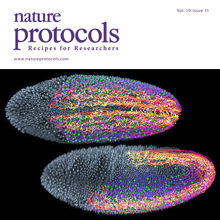
Light-sheet microscopy is a powerful method for imaging the development and function of complex biological systems at high spatiotemporal resolution and over long time scales. Such experiments typically generate terabytes of multidimensional image data, and thus they demand efficient computational solutions for data management, processing and analysis. We present protocols and software to tackle these steps, focusing on the imaging-based study of animal development. Our protocols facilitate (i) high-speed lossless data compression and content-based multiview image fusion optimized for multicore CPU architectures, reducing image data size 30–500-fold; (ii) automated large-scale cell tracking and segmentation; and (iii) visualization, editing and annotation of multiterabyte image data and cell-lineage reconstructions with tens of millions of data points. These software modules are open source. They provide high data throughput using a single computer workstation and are readily applicable to a wide spectrum of biological model systems.
Intercepting a moving object requires prediction of its future location. This complex task has been solved by dragonflies, who intercept their prey in midair with a 95% success rate. In this study, we show that a group of 16 neurons, called target-selective descending neurons (TSDNs), code a population vector that reflects the direction of the target with high accuracy and reliability across 360°. The TSDN spatial (receptive field) and temporal (latency) properties matched the area of the retina where the prey is focused and the reaction time, respectively, during predatory flights. The directional tuning curves and morphological traits (3D tracings) for each TSDN type were consistent among animals, but spike rates were not. Our results emphasize that a successful neural circuit for target tracking and interception can be achieved with few neurons and that in dragonflies this information is relayed from the brain to the wing motor centers in population vector form.
The reward system is a collection of circuits that reinforce behaviors necessary for survival [1, 2]. Given the importance of reproduction for survival, actions that promote successful mating induce pleasurable feeling and are positively reinforced [3, 4]. This principle is conserved in Drosophila, where successful copulation is naturally rewarding to male flies, induces long-term appetitive memories [5], increases brain levels of neuropeptide F (NPF, the fly homolog of neuropeptide Y), and prevents ethanol, known otherwise as rewarding to flies [6, 7], from being rewarding [5]. It is not clear which of the multiple sensory and motor responses performed during mating induces perception of reward. Sexual interactions with female flies that do not reach copulation are not sufficient to reduce ethanol consumption [5], suggesting that only successful mating encounters are rewarding. Here, we uncoupled the initial steps of mating from its final steps and tested the ability of ejaculation to mimic the rewarding value of full copulation. We induced ejaculation by activating neurons that express the neuropeptide corazonin (CRZ) [8] and subsequently measured different aspects of reward. We show that activating Crz-expressing neurons is rewarding to male flies, as they choose to reside in a zone that triggers optogenetic stimulation of Crz neurons and display conditioned preference for an odor paired with the activation. Reminiscent of successful mating, repeated activation of Crz neurons increases npf levels and reduces ethanol consumption. Our results demonstrate that ejaculation stimulated by Crz/Crz-receptor signaling serves as an essential part of the mating reward mechanism in Drosophila. VIDEO ABSTRACT.
Anatomy of large biological specimens is often reconstructed from serially sectioned volumes imaged by high-resolution microscopy. We developed a method to reassemble a continuous volume from such large section series that explicitly minimizes artificial deformation by applying a global elastic constraint. We demonstrate our method on a series of transmission electron microscopy sections covering the entire 558-cell Caenorhabditis elegans embryo and a segment of the Drosophila melanogaster larval ventral nerve cord.
Parallel circuits throughout the CNS exhibit distinct sensitivities and responses to sensory stimuli. Ambiguities in the source and properties of signals elicited by physiological stimuli, however, frequently obscure the mechanisms underlying these distinctions. We found that differences in the degree to which activity in two classes of Off retinal ganglion cell (RGC) encode information about light stimuli near detection threshold were not due to obvious differences in the cells’ intrinsic properties or the chemical synaptic input the cells received; indeed, differences in the cells’ light responses were largely insensitive to block of fast ionotropic glutamate receptors. Instead, the distinct responses of the two types of RGCs likely reflect differences in light-evoked electrical synaptic input. These results highlight a surprising strategy by which the retina differentially processes and routes visual information and provide new insight into the circuits that underlie responses to stimuli near detection threshold.
State-of-the-art silicon probes for electrical recording from neurons have thousands of recording sites. However, due to volume limitations there are typically many fewer wires carrying signals off the probe, which restricts the number of channels that can be recorded simultaneously. To overcome this fundamental constraint, we propose a method called electrode pooling that uses a single wire to serve many recording sites through a set of controllable switches. Here we present the framework behind this method and an experimental strategy to support it. We then demonstrate its feasibility by implementing electrode pooling on the Neuropixels 1.0 electrode array and characterizing its effect on signal and noise. Finally we use simulations to explore the conditions under which electrode pooling saves wires without compromising the content of the recordings. We make recommendations on the design of future devices to take advantage of this strategy.
The endosomal-sorting complex required for transport (ESCRT) is evolutionarily conserved from Archaea to eukaryotes. The complex drives membrane scission events in a range of processes, including cytokinesis in Metazoa and some Archaea. CdvA is the protein in Archaea that recruits ESCRT-III to the membrane. Using electron cryotomography (ECT), we find that CdvA polymerizes into helical filaments wrapped around liposomes. ESCRT-III proteins are responsible for the cinching of membranes and have been shown to assemble into helical tubes in vitro, but here we show that they also can form nested tubes and nested cones, which reveal surprisingly numerous and versatile contacts. To observe the ESCRT-CdvA complex in a physiological context, we used ECT to image the archaeon Sulfolobus acidocaldarius and observed a distinct protein belt at the leading edge of constriction furrows in dividing cells. The known dimensions of ESCRT-III proteins constrain their possible orientations within each of these structures and point to the involvement of spiraling filaments in membrane scission.